
The idea
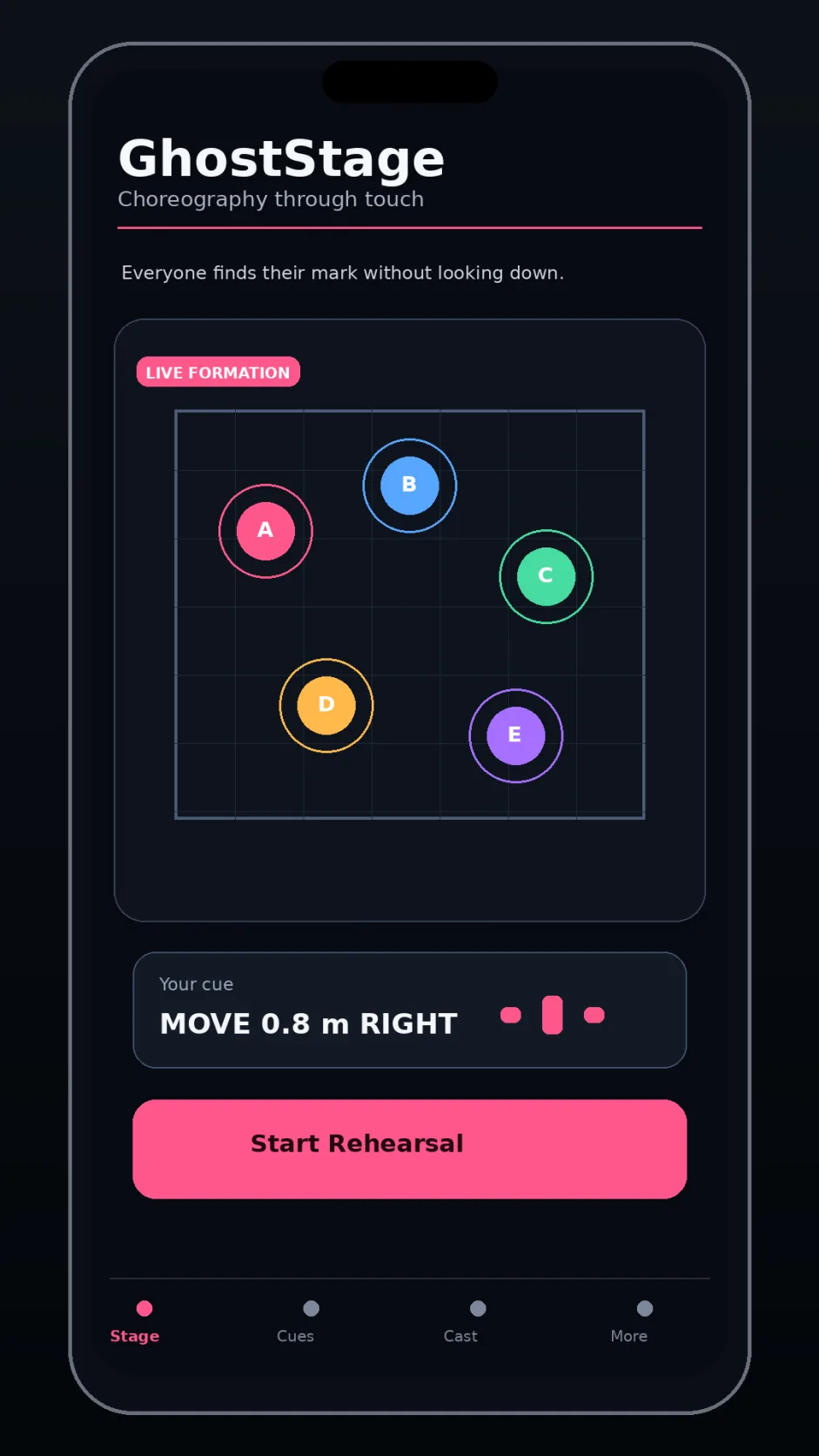
Pocket phones guide performers through blocking with coded haptics tied to calibrated floor positions and stage cues.
How it works
- Visually calibrate a shared stage coordinate frame and mark performer starting positions.
- Track each phone against the shared marks using supported ranging and motion sensors.
- Send coded haptic cues for a direction or next blocking mark; one vibration motor signals patterns, not literal left and right sensations.
AI’s role: Translate a blocking plan into simple cues and encode directions as distinct patterns; shared calibration and measured tracking determine positions.
First demonstration
Place three performers on measured floor marks, run a short sequence of screen-free cues, and compare their paths with the intended blocking.
What to solve next
How reliable are heading, pocket tracking, and background cues during a performance, and how should the system degrade as performers lose tracking?