
The idea
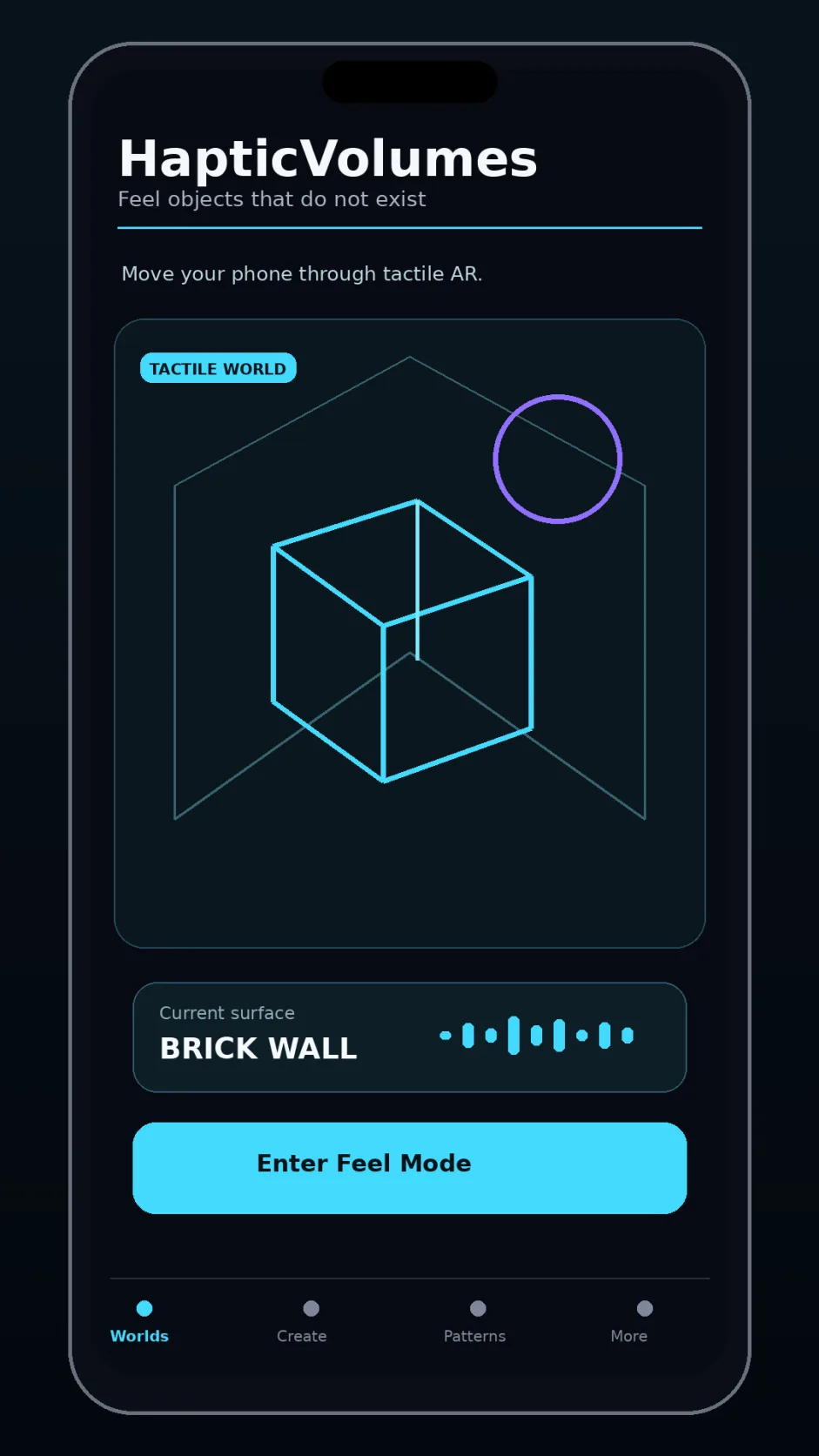
After a spatial calibration, explore invisible walls, spheres, keys, water, or mazes as a phone changes haptic texture when its measured pose intersects virtual geometry.
How it works
- Calibrate a shared spatial reference and place simple virtual geometry in the room.
- Track the phone pose and test it against planes, spheres, or other shapes.
- Change haptic patterns as the phone enters, follows, or leaves a shape, then lower the screen after calibration.
AI’s role: Help create and label tactile interactions; tracked pose, geometric intersection, and predefined haptic patterns determine what the user feels.
First demonstration
Calibrate one plane and one sphere, move a phone across and through them, and record where each haptic transition occurs.
What to solve next
How much tracking drift can users tolerate, and can people reliably distinguish the patterns without implying a solid surface or real resistance?