
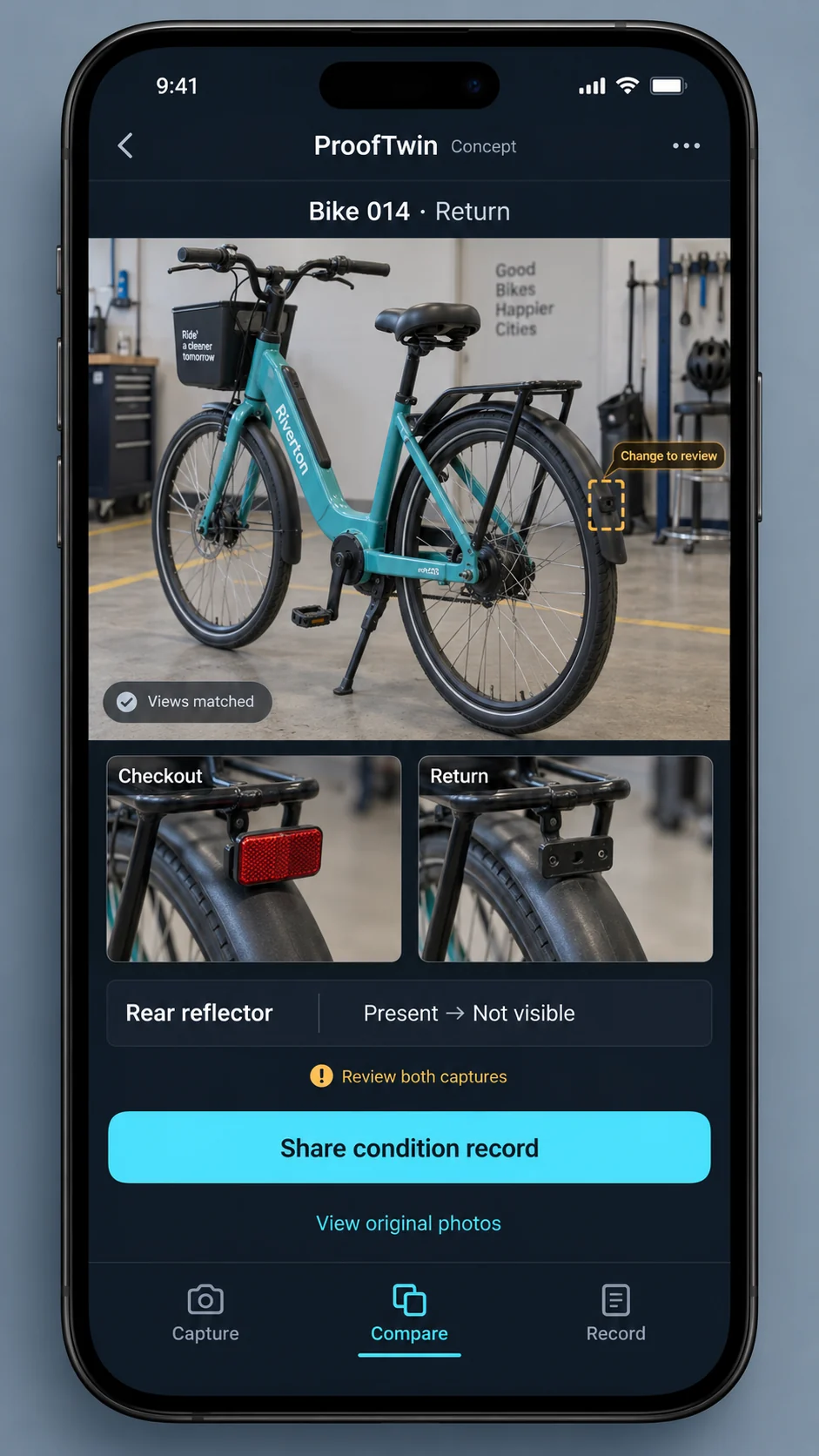
The idea
Capture a rental bicycle at checkout and again at return. Align the observations, highlight visible changes, and let the renter and shop review the same before-and-after record with the original photos attached.
How it works
- Give each rental bicycle a capture link or QR code. Guide overlapping photos around the bike, retaining camera poses, capture times, and depth on supported devices; mark surfaces that were not adequately observed.
- Create a versioned checkout record containing the original images and any reconstructed geometry. Share a web link so the renter and shop can inspect and acknowledge the same record before the handoff.
- At return, guide comparable viewpoints and align the captures using stable features. Account for lighting, reflections, occlusion, and intentional adjustments such as seat or handlebar position.
- Start by flagging missing visible components and large changed regions. Show paired original views and mark ambiguous observations as needing review rather than assigning blame or a repair cost.
- Share the comparison with both parties. A renter who later lends a bike or camera can create the next record; a rental shop introduces the workflow to each new customer.
AI’s role: Guide views of missed surfaces and propose changed components or regions for review. Geometric alignment, capture comparability, and original evidence support the comparison; people decide condition and responsibility.
First demonstration
Capture one bicycle twice under controlled lighting, first with a rear reflector attached and then with it removed. Show matching original views and flag the change for review. Include unchanged bikes and altered lighting to measure false alarms before attempting small scratches or dents.
Who pays
Bicycle-rental shops pay for checkout and return records if the workflow is fast enough for the counter and makes condition reviews easier. Begin with missing components and major visible changes.
How it spreads
Rental shop → shared checkout record → renter → next borrower. Every useful record has another person who needs to receive and review it, and one shop can introduce the tool at every rental.
What to solve next
Can the system distinguish real condition changes from missing views, lighting, reflections, and reconstruction noise? A shared timestamped record also needs clear versioning and acknowledgments; it is not inherently tamper-proof evidence.